

Tim’s story
In April 2026, Tim traveled from Ontario, Canada, to Avante Ibogaine Institute in Nassau, Bahamas to undergo clinical ibogaine treatment. Now 64 years of age, Tim describes experiencing lifelong anxiety since childhood that became increasingly difficult to manage. He also speaks of how depression emerged and of turning to alcohol and sleeping pills to cope. Before coming to Avante, Tim attended two residential treatment programs—one lasting six weeks and another twelve—and received extended psychiatric care, but says he had not found any lasting relief.
Tim also shares the medical crisis that led him to consider ibogaine. Since his treatment, he describes a profound personal shift providing greater emotional peace, a different way of experiencing the world, and restored faith. As he puts it, “I have seen peace and I have seen beauty.”
Tim chose to share his story in his own words in order to offer perspective to others exploring ibogaine treatment care options for themselves or someone they love.
It is important to acknowledge that Tim’s account reflects his personal experience. Individual outcomes vary from person to person and no particular result is guaranteed.
At a glance
| Age | 64 years |
|---|---|
| From | Ontario, Canada |
| Treatment Center | Avante Ibogaine Institute, Nassau, Bahamas |
| Treatment Date | April 2026 |
| Pre-Treatment Diagnosis | Chronic Anxiety Disorder, Depression, Alcohol and Drug Misuse |
| Previous Treatments | Two (2) Residential In-Patient Program |
Key moments
- 0:48 Introduction to Tim
- 1:19 Living with chronic anxiety
- 5:02 A medical crisis becomes a turning point
- 6:24 Searching for answers: the theories and methods he researched
- 11:00 Arriving at Avante resigned and ready to surrender
- 12:46 “Ibogaine fixed something”: Tim describes a sense of rebirth
A typical treatment week at Avante
A typical treatment week at Avante Ibogaine Institute begins with travel to the Institute’s private resort-style facility on the beautiful Caribbean island of in Nassau, Bahamas. Your Avante driver will greet you at Lynden Pindling International Airport and transport you directly to the center in one of Avante’s comfortable air-conditioned transport vans. Upon arrival, each client completes an individualized clinical intake process that may include a medical and psychological evaluation, lab work, drug screening, and an EKG. Clients are given a tour through Avante’s private, luxury campus containing a resort-style pool with verandas overlooking the ocean, meditation gardens, hammocks and fountains, and generous lounging areas to enjoy the tropical Caribbean breezes. Each client is provided their own oversized guest room with private en-suite bath, posturepedic bedding, WIFI, and comfortable appointments.
The following day, clients undergo all clinical preparations including TX tests, an EKG, and IV electrolyte hydration in preparation for their physician-supervised clinical ibogaine treatment, which includes 24-hour cardiac monitoring by ICU-trained nursing staff. Preparation and integration support is provided for all clients. Because each individual’s care plan and personal needs are unique, length of stays can range between 5 and 15 days, with most treatment weeks being 5–8 days.
Since 2013, Avante has proudly maintained an exceptional clinical safety record. Client safety, comfort, and confidentiality are the foundation of our care and guide every aspect of the Avante client’s ibogaine treatment experience. Each person’s screening, care plan, length of stay, overall treatment experience, and outcome may differ. Tim’s story reflects his personal experience and is not a guarantee of any individual’s ibogaine experience or treatment result.
Learn more about what an ibogaine treatment week at Avante includes →
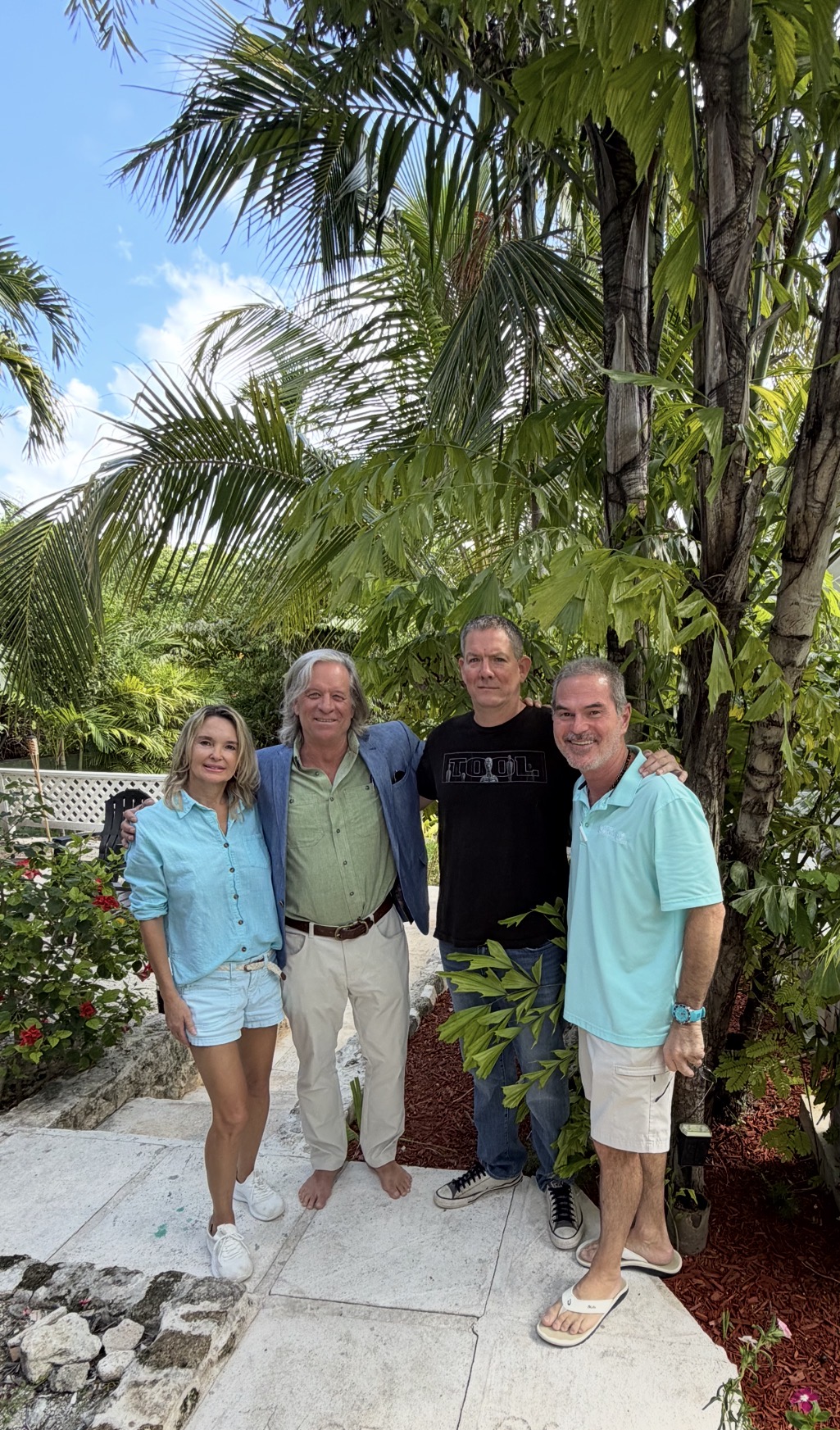
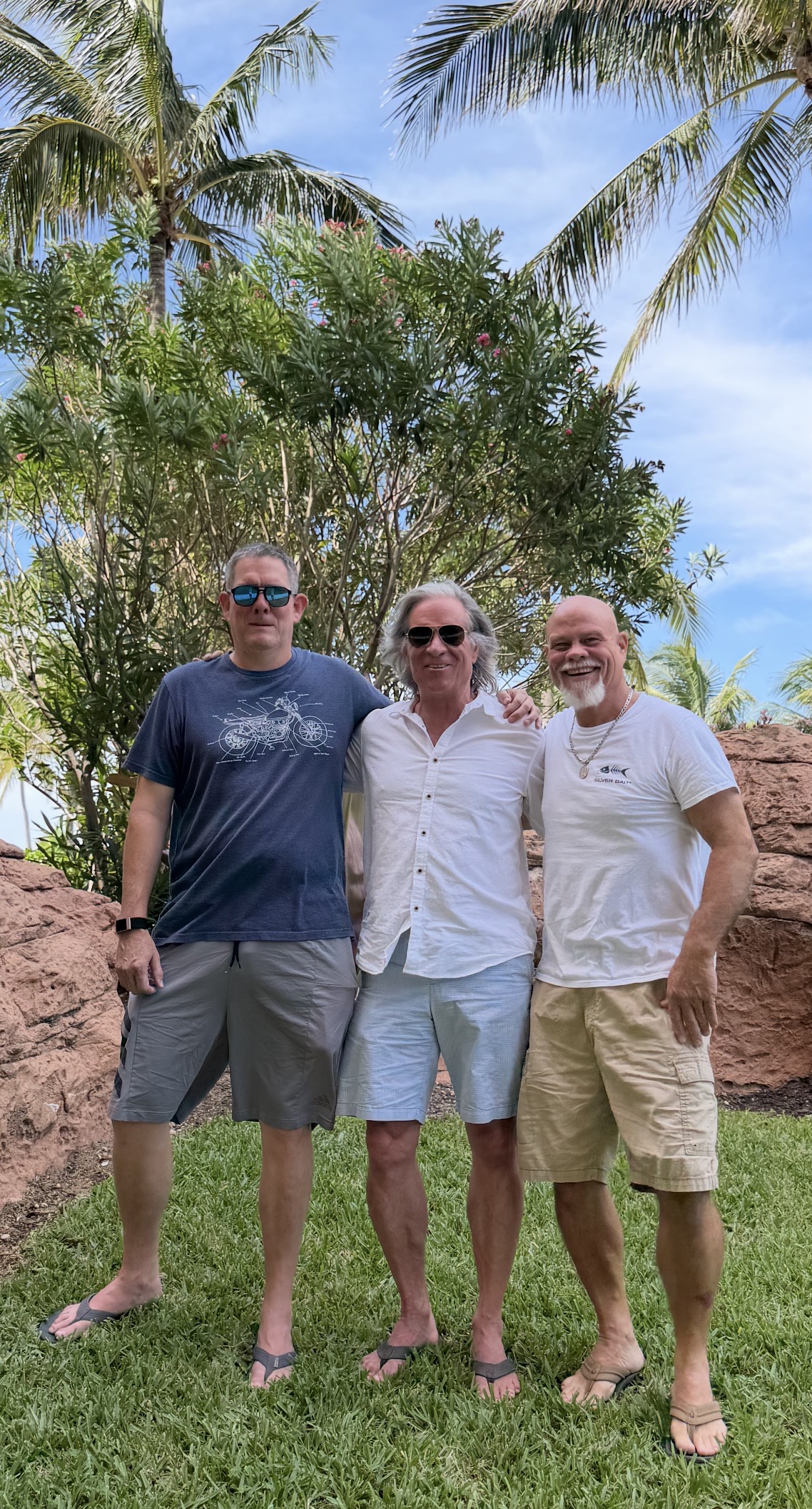
Tim’s Departure Day
What the research says (and doesn’t)
Ibogaine is a psychoactive compound derived from the root bark of the West African shrub Tabernanthe iboga. It is not approved by the U.S. FDA, and most human research to date consists of anecdotal evidence, observational and open-label studies rather than controlled trials. A 2024 Stanford-led study of 30 U.S. Special Operations veterans, published in Nature Medicine, reported improvements in depression, anxiety, PTSD and associated symptoms following magnesium-ibogaine treatment. However, it had no control group, and research specifically on ibogaine for alcohol use remains limited.
Of Important Note: Ibogaine carries medical cardiac risks, particularly to heart rhythm, prolonged QT intervals, and has been associated with deaths when not conducted in a proper clinical environment with qualified cardiac monitoring. When considering clinical ibogaine treatment consult only highly qualified clinical treatment providers with extended records of successful clinical care.
Medical content and treatment process provided by Srinivasa Bodha, MD, Medical Director, and Ava Chaise, CCRN, Clinical Director, Avante Ibogaine Institute.
Sources: Cherian KN et al., Nature Medicine, 2024; Koenig X & Hilber K, “The anti-addiction drug ibogaine and the heart: a delicate relation,” Molecules, 2015
If you are struggling or thinking about harming yourself, please reach out now. In the U.S. or Canada, call or text 988. Outside of the United States? Contact your local emergency hotline.
Full transcript
Read the full transcript ▾
Nico: Hi everyone, I’m Nico. The following message is from Tim, who’s 64 years old and received his ibogaine treatment at Avante Ibogaine Institute in the Bahamas earlier this year. Tim chose to share his experience and talk about how he’s been doing since his treatment, in the hope that his story may help others considering ibogaine therapy for themselves or for someone they care about. At Avante, we take our clients’ privacy and confidentiality very seriously, and we share their stories only at their request and with their permission. We’re grateful to Tim for sharing his experience honestly and in his own words, without any embellishment or assumptions as to what others’ ibogaine experience may be like. So, without any further delay, here is Tim.
Nico: Thanks, Tim. So, your depression — and I don’t know all of the issues you experienced — but the anxiety, the depression: did that happen over time, or has it been a lifelong thing? Did it happen post-retirement, or sometime during your career? Or was there an event that sparked it?
Tim: I’ve had even more time since ibogaine to really think backwards and analyze it for what it was, and I can go back to the proverbial early childhood. I had loving parents, food on the table. I had all the necessities; you’d call them upper middle class. Life was good. But I remember always being different. I remember I never felt comfortable. I was, quote-unquote, a Ritalin child. You remember back in the day, Ritalin was what you gave the hyper kids, at least in Canada. That was the medicine. My mother was very earthy, and I guess the plus side was my mother said, “I’m not putting my kid on Ritalin.” The negative side was they did nothing else.
So I remember always being scared of getting up and going to school, never wanting to get out of bed. Very good athlete. Very bad academically — really bad. In grade six, seven — and this is at a private school, maybe 500 or 600 kids in the whole school; it was tiny — they finally go, “We think he has a reading disability.” I remember being a bit shocked then, but as I got older I’d go, “What were you people thinking? How did you not catch this?” My parents didn’t catch it.
So as I look back, I believe I always had it. I believe I compensated with athletics. When I went into the work world, I was very fortunate. My dad was a stockbroker — back in the day they called them stockbrokers — and I happened to go to work with him. It wasn’t a thing back then, but I ended up on the trading floor of the Toronto Stock Exchange, and it was weird, because everything just made sense to me. I won’t get into the details, but I ended up going into that industry.
I would always say to the doctors, “I’m not depressed.” Near the end, I was getting depressed, but mine was always super anxiety, and I had it all the time. I couldn’t settle.
Nico: Fear or tension?
Tim: It was so bizarre. There were certain things where I’d go, “Oh, I’ve got exams tomorrow, I’m anxious.” But I lived in a constant state. And when I was older — I’m talking 30s, 40s, 50s, and especially late 50s when I had time — I’d go, “I can’t explain it to you. I literally have nothing that’s making me anxious, but my brain is anxious.” This was innate to me — to my brain, to my nervous system. And that’s why nothing would work.
It was manageable, and I would argue it was of value at stages in my professional career. In one of my letters to Jo, I said there have been times when this was a gift, because I was on heightened alert, heightened everything, all the time. I think it saved my life. But now I’m paying the price. I wrote her that when I was away for 90 days [check audio], saying, “If this doesn’t work, I’m done.” I came out. It was okay. The medicine wore off — when I say medicine, I mean sleeping pills — and I said, “I’m done.” And then Luke came along with ibogaine, and I met you. Thank God.
Nico: Yeah. Thank God.
Tim: I do — multiple times a day. Quite literally.
Nico: You know, when you were young, you weren’t medicated. Did you go through periods of medication — SSRIs, antidepressants, anti-anxiety medications, benzodiazepines? Doctors didn’t try to throw those at you?
Tim: I didn’t want them, didn’t need them. But it was getting to the point — and when I say getting to the point, it was over about a six-, seven-, eight-year period — it just kept increasing. I just kept turning to booze, and medicating.
Nico: Wow.
Tim: So my issue before I came to you — I guess the breaking point — Jo very kindly realized I was non-responsive to a phone call, which I wouldn’t normally be. Next thing I know, I wake up in an ER, strapped to a gurney. Had it not been for Jo, I probably would have died on the floor. I lived in fear. It happened. I went on a terrible bender. Jo got me back here. Luke said, “You’ve got to go to ibogaine.” I talked to you sitting on her sofa, on a phone call.
So the period of time prior to arriving at your place — the tipping point, let’s say, going six months back — [check audio: part of the conversation appears to be missing here] … I would look at Stanford studies. I’d listen to Andrew Huberman. I was open to trying to understand anything, from that to — I don’t know if you know — the famous John Lennox, the great Christian apologist. I would take it from science to math to religion to psychotherapy. I would look at every single angle.
And the funny thing is, I came back from ibogaine and I said, “You know what? I don’t care.” And not “I don’t care” — I don’t need to know. Now I know. And it sounds arrogant. I can say that to you and I can say it to Luke [check audio]. The funny thing is, with all the knowledge I tried to take in, all the intellect I had, I couldn’t fix it. It was unfixable. As I say to one friend who’s going through a tough time, it is literally inside my brain. It’s like Michael J. Fox — nobody’s going to tell him to sit still. They understand he can’t. I could not control my brain. It was a struggle from the moment my eyes opened. Bizarre.
So that’s not me disciplining. I’m very comfortable in what I don’t know. And what I don’t know is how it happened, but I do know what happened.
Nico: Meaning the results — the change that occurred through ibogaine itself.
Tim: Yeah. And I’m not working at it. I’m not going to pretend that I meditate on a regular basis [check audio]. I said, “No, I don’t have to. If I ever want to sit still, I sit still.” The closest I come to meditation is I smoke my cigar, sit on the deck, and watch a bird blink.
Nico: That’s pretty good.
Tim: I know. And I go, “This is beautiful. Thank you, God, for letting me see this.” That’s my meditation. I’ll smoke a stogie for an hour, and it feels amazing. And I never do it when I’m under stress, because I’m never under stress. I might go, “Okay, I just want quiet,” and I’ll go do it. That’s my chapel, and it works for me. But no work other than that.
Nico: You say you don’t work at it, but I like the fact that you’re protecting it — that you’re putting boundaries and limits, and you’re not overexerting yourself. It’s important for people to recognize, too, that you don’t want to poke ibogaine —
Tim: No.
Nico: — and tell it to prove it to you. You don’t need to test unnecessary limits. You don’t need to study and become this deep intellectual just because. There are certain boundaries where we just treat ourselves more gently and with more respect, and I think that’s what ibogaine opens up to us. Would you agree with that?
Tim: Yeah, I think that’s very, very well put. And listening to you helped me formulate a better answer for myself. I treat ibogaine as a gift from God, and like any precious gift, I respect it. As you were speaking, listening to somebody else say it helped me process what I was really trying to say, which is: I’ve been given this great gift — no different than the wise men bringing frankincense and myrrh. It’s not something I can hold physically, but other than being born, this is the biggest gift in life. So I don’t even have to think about it. For most of us, it’s innate to take something precious and protect it. So without thought, I engage in the behavior you described — with no effort, no thought. I genuinely don’t think about it.
Nico: That’s a beautiful thing.
Tim: Yeah. Well, hearing you speak helped me put it into words, so thank you for that. I would sit by myself and stumble over how I’d explain this to myself, and I’ve never said it like that. So thank you.
I remember the very first night — all four of us were out under the veranda. It was dark, it was quiet, and everybody had their moments. And I said, “Look, I’m just here to surrender, and whatever is meant to happen, it’s in God’s hands, and I’m okay.” I showed up not because of discipline. I showed up because that’s where I’d gotten to in life. I was resigned.
Nico: Resigned.
Tim: I was resigned. And I’m very, very grateful. Now I’m resigned, but in a very different way. I have seen peace. I have seen beauty. I look at trees and birds — I intellectually knew they were beautiful, even as a young man, but I’d go, “I just don’t get what everybody’s talking about.”
I was exactly what you said: resigned, open, non-analytical. But I was that because I was so far gone. So I think what you’re saying is incredibly accurate, and it needs to happen, but I don’t want to pretend I put myself in that place through great discipline. I arrived there — fresh out of the ER, then 90 days, then all of a sudden the sleeping stops again. I was actually sitting on the front steps of this very house, probably 20 feet from where I am now, in a zombie state, and Luke just patted me on the back. Luke’s very candid — 30 years old, a good man — and he said, “Look, don’t quit. You’ve got nothing to lose. Trust me. Will you do this?” And I said, “Yes. I will go.”
I don’t know, but I only know me, and I know that the ibogaine fixed something. It wasn’t something a sleeping pill was going to fix. It wasn’t something an antidepressant was going to fix. I had done all that. As I said, I’d been to two different facilities — one the top in the country, another pretty highly ranked that had won awards — six weeks in one instance and 12 weeks in another. So I had done it all. And on top of that, while I was working, I’d see a top psychiatrist.
I’ll use an analogy that I think is easier for all of us. You can be a great athlete with an injury — whatever the sport — a known, understood injury, and it either stops you or you’re always at 80 or 90%. And maybe at 90% you’re good enough. Say it’s the quarterback at Notre Dame: you’re so good that you at 90% are better than a lot of people at 100%. If you take that analogy — and this is not meant to sound arrogant — I was capable at a reasonably high level, but I always knew something was wrong with me. I always knew I was off. Jo — and she can hear this, so she will attest to it — when she’d get really frustrated, she’d just go, “I don’t know what’s wrong with you. There’s something missing.” And I said, “Yeah, I know there is.” And that was not very long before I came to you.
It is the closest thing, I guess — I’m not comparing myself to Jesus — but it is a rebirth. It’d be like if I went to my buddy’s church and said, “I now get it. I was a child when I was baptized; baptize me now as a fully understanding adult.” So the figurative rebirth is what I think happened in my brain. I see everything differently, I feel everything differently, I know things differently. It’s a different filter. It’s very hard to put into words, but that’s the description I would use. In the absence of any scientific data, I look at it and go, “Miracle.”
Jo is not a structured-religion person, but she’s very spiritual. And I had given up on all that. I was raised religiously, but I’d had those moments of “There is no God.” The biggest shift in me — it’s outward and inward — is that now I’m full on. Yes, I get it. I don’t need scientific proof, and I’m very comfortable with that. That has been the biggest shift. I could bore you to death with it — day after day of incredible coincidences, timings, weird things. It’s the old “If you’re open to the universe, it’ll come back to you.” I get that on some level, but I truly feel it’s the answer to my prayers. And if I get 24 months of a beautiful life, I’m happy. That would be great. To have this experience — it’s unbelievable. I just can’t put it into words.